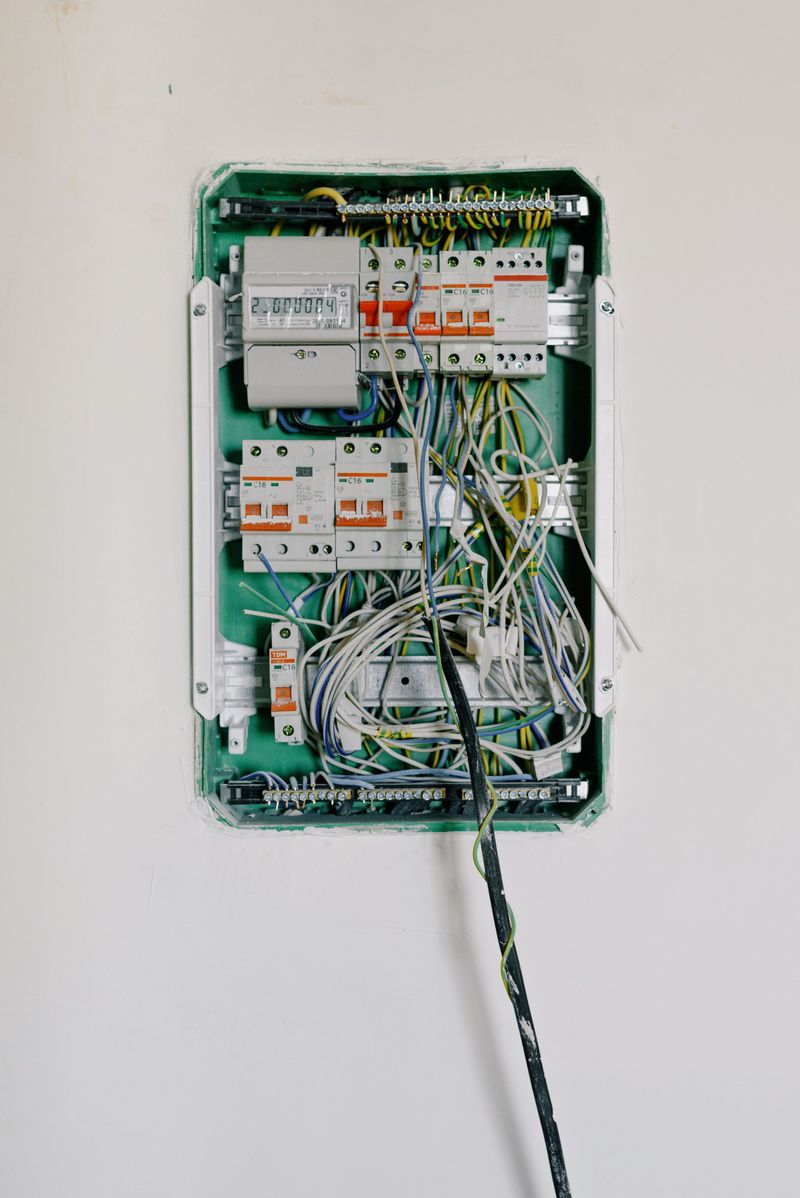
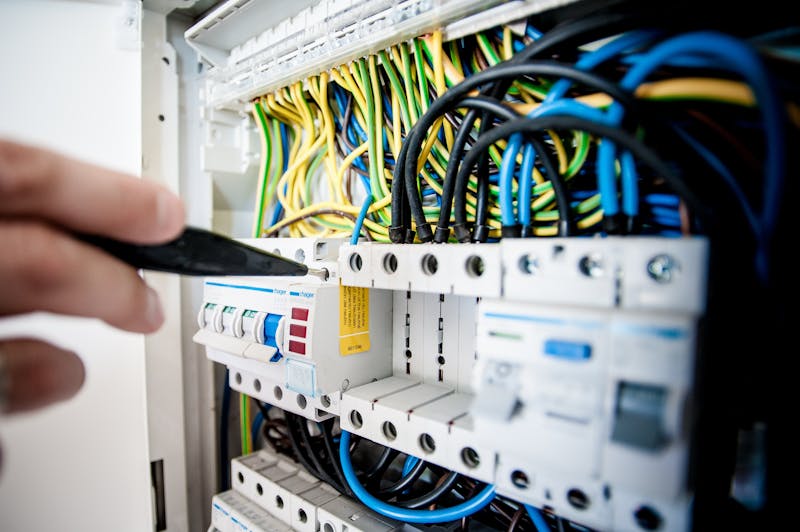
Your electrical panel is the heart of your home's wiring. Every circuit in the house runs through it. When it starts failing, the problems show up fast — and ignoring them gets dangerous. Here's what Edmonton homeowners need to know about panel upgrades, what they cost, and how the process actually works.
Signs your panel needs replacing
Some of these are inconveniences. Others are fire hazards. All of them mean the same thing: your panel is not keeping up with the electrical load your home demands in 2026.
- Breakers trip repeatedly. If you reset the same breaker every time you run the microwave and the toaster at the same time, the circuit is overloaded. One tripped breaker is a normal safety feature. The same breaker tripping weekly is a warning.
- Lights flicker or dim when appliances kick on. Your dryer starts and the kitchen lights dip. That means the panel cannot supply enough current to everything at once.
- Burning smell near the panel. Stop reading and call an electrician. A burning smell means something is arcing or overheating inside the enclosure. This is an emergency.
- You still have 60-amp or 100-amp service. Most Edmonton homes built before the 1970s came with 60-amp panels. That was enough for a few lights and a fridge. It is not enough for air conditioning, a home office, a hot tub, or an EV charger. Even 100-amp service struggles with a modern household.
- Fuses instead of breakers. Fuse panels are not illegal, but they are outdated. They cannot be expanded, insurance companies often charge more for them, and finding the right replacement fuses is getting harder every year.
- Your panel is a Federal Pacific or Zinsco. These brands have well-documented failure rates. Federal Pacific Stab-Lok breakers, in particular, have been shown in independent testing to fail to trip during overcurrent conditions. If you open your panel door and see either name, get a quote for replacement. Most Edmonton electricians will recommend it regardless of whether you are having problems yet.
What a 200-amp upgrade costs in Edmonton
The cost of a full 200-amp panel upgrade in Edmonton depends on a few things. We'll quote the job after seeing your current setup.
- Panel location. If the panel is in the basement near the meter, the job is straightforward. If it needs to be relocated — say, from a bedroom closet to the utility room — the cost goes up because of the additional wiring and patching.
- Service entrance. Upgrading from 60-amp to 200-amp usually means replacing the mast, the meter base, and the service entrance cable from the weatherhead down. EPCOR needs to disconnect and reconnect at the transformer, and that coordination adds time.
- Number of circuits. A basic 200-amp panel has space for 40 circuits. If you want dedicated circuits added during the upgrade — for a workshop, a second kitchen, an EV charger — each one adds labour and materials.
- Permit and inspection fees. The City of Edmonton electrical permit fee depends on the scope. Your electrician typically pulls this for you.
Get at least two quotes. A licensed Edmonton electrician should be able to give you a firm number after looking at your existing panel and service entrance in person. Be cautious of anyone who quotes over the phone without seeing the job.
The EPCOR inspection process
This is the part that confuses most homeowners, so here is how it actually works in Edmonton.
Before any panel upgrade, your electrician pulls an electrical permit through the City of Edmonton's Safety Codes system. The permit tells the city what work is being done and triggers the inspection requirement.
Once the new panel is installed and wired, your electrician calls in for an inspection. A Safety Codes Officer comes out and checks the work — proper grounding, correct breaker sizing, cable fill, labelling, and that everything meets the current Canadian Electrical Code.
If the inspection passes, EPCOR is notified to reconnect power or to upgrade the service at the transformer. In most cases, EPCOR needs to come out twice: once to disconnect before the work starts and once to reconnect after it passes inspection. Your electrician handles the scheduling for both visits.
The whole process — from pulling the permit to EPCOR reconnecting — usually takes one to three days for a straightforward upgrade. If EPCOR needs to run new overhead or underground service, add a week or two for their scheduling.
What the actual upgrade day looks like
Expect the power to be off for most of the day. Here is the typical sequence for a panel upgrade in an Edmonton home.
- Morning: EPCOR disconnects power at the meter. Your electrician removes the old panel and any outdated wiring in the panel area.
- Midday: The new 200-amp panel goes in. Every circuit gets landed on the new breakers, labelled, and tested. If the service entrance cable is being upgraded, the new mast and weatherhead go up at this stage.
- Afternoon: The electrician calls for inspection. In Edmonton, same-day inspections are common if you call in before noon. Once the inspector signs off, EPCOR reconnects.
- End of day: Power is back on. Your electrician walks you through the new panel, shows you which breaker controls what, and makes sure everything is running.
Plan for a full day without power. Charge your devices the night before. If it is winter in Edmonton — and it usually is — make sure you have a plan for heat, since the furnace fan needs electricity even if you have gas heating.
When to stop Googling and call an electrician
If you recognized your situation in the signs listed above, you already have your answer. A panel upgrade is not a weekend DIY project. In Alberta, electrical work requires a licensed electrician and a permit. There are no exceptions for homeowners on panel work.
Here is a simple rule: if your panel is more than 30 years old, has fuses, is a Federal Pacific or Zinsco, or cannot support the appliances and devices you use every day — call for a quote. The inspection is quick, the quote is free from most Edmonton electricians, and you will know exactly where you stand.
A panel upgrade is one of those jobs that pays for itself. It protects your home, it makes your insurance company happy, and it gives you the capacity to actually use your house the way you need to — whether that means adding an EV charger in the garage, finishing the basement, or just running the air conditioner without the lights dimming.